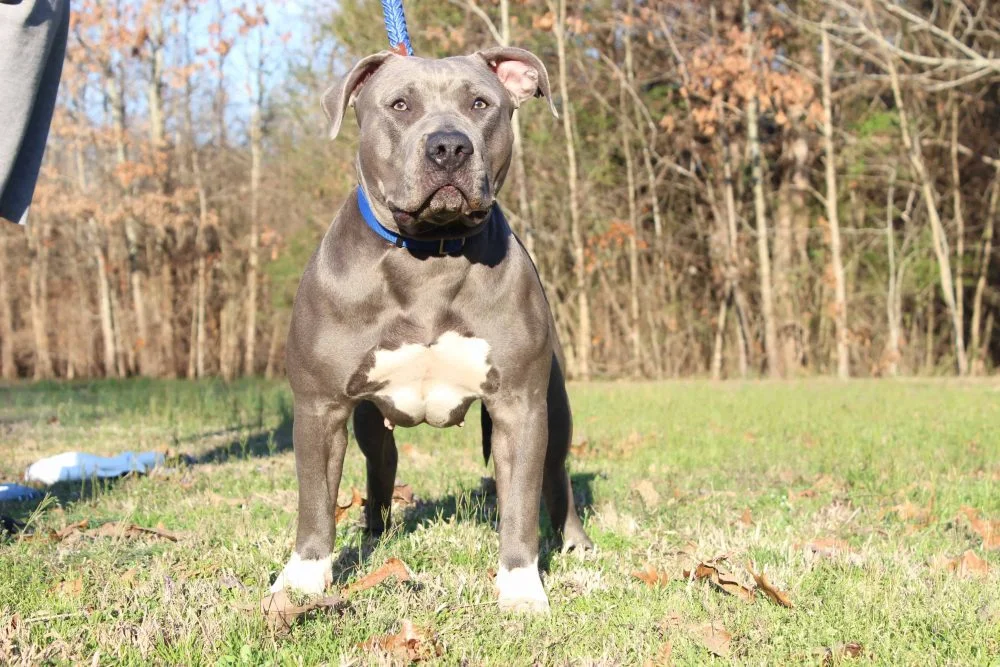
You’ve found the perfect XL Pitbull puppy. The photos are incredible: broad head, thick build, that unmistakable blue-gray coat. You’re already counting down the days until pickup. But here’s something most buyers never think to ask their breeder: what has this puppy already experienced in the first eight weeks of its life?
The answer to that question matters more than bloodlines. More than color. More than size. Because the experiences and the absences that shape a puppy’s brain in its first 16 weeks will influence its behavior for the next decade.
This is the XL pitbull puppy socialization window. And for XL Pitbull owners, understanding it isn’t optional.
What the XL Pitbull puppy Socialization Window Actually Is
Between roughly 3 and 16 weeks of age, a puppy’s brain is in a state unlike any other period in its life. Neural pathways are forming rapidly. The brain is essentially asking a single question over and over: Is this safe or a threat?
Every new person, sound, surface, smell, and experience the puppy encounters during this window gets catalogued. Things encountered calmly and positively get filed as “normal.” Things never encountered at all get filed as “unknown”; and, for many dogs, “unknown” defaults to “potentially dangerous” as they mature.
After around 16 weeks, that window begins to close. The brain shifts from actively seeking to learn what’s normal to defaulting to what it already knows. A dog that hasn’t met children by week 14 won’t automatically accept them at week 20. A dog that has never heard a vacuum cleaner, experienced a car ride, or been handled by a stranger during this window will often react to those things with fear or reactivity later, even with extensive training.
This is not a character flaw. It’s neuroscience.
Why It Matters More for XL Pitbulls
Every breed benefits from early socialization. But with XL Pitbulls specifically, the stakes are higher, not because of any inherent aggression (well-bred XL Pitbulls are famously people-oriented and gentle), but because of what an under-socialized large, powerful dog looks like in practice.
A fearful Chihuahua is inconvenient. A fearful 90-pound XL Pitbull is a genuine management challenge, and often the first step toward a dog being rehomed, surrendered, or worse. The same nervous energy that’s barely noticeable in a small breed becomes loud, physical, and stressful in a dog of this size.
The good news is that XL Pitbulls are extraordinarily responsive to socialization. Their natural desire to bond with and please their humans makes them one of the most trainable breeds when the foundation is set correctly. Early socialization isn’t just damage prevention; it’s the foundation for the confident, stable, affectionate dog this breed is known for.
What Happens Before the Puppy Reaches You
Here’s the part most first-time buyers don’t realize: your puppy’s socialization has already started before you pick it up.
Puppies are typically rehomed when they are 8 to 10 weeks of age. But the socialization window opened at week 3. That means the breeder is responsible for the first half of the most important developmental period in your dog’s life.
A breeder who keeps puppies in a clean but isolated kennel, with minimal human handling and no environmental variety, is sending you a puppy with a 5-week head start on anxiety. A breeder who raises puppies in the home, introduces them to different people, plays varied sounds, handles them daily, and exposes them to different surfaces and textures is giving you something far more valuable than a pretty puppy. They are giving you a stable one.
When evaluating a breeder, ask directly: Where are the puppies raised? Who handles them daily? What sounds, people, and environments have they been exposed to? A good breeder will answer enthusiastically and in detail. This is something they are proud of.
What You’re Responsible For: Weeks 8 to 16
Once your puppy is home, the clock is still running. You have roughly 6 to 8 weeks to make the most of the remaining window. Here is what that should look like in practice.
People diversity. Your puppy needs to meet people of different ages, appearances, and energy levels. Men with beards. Children. People wearing hats or sunglasses. People who move slowly and loud people. The goal is not to overwhelm but to normalize. Short, positive encounters with lots of treats and praise are far more effective than long, stressful ones.
Sounds. Traffic, thunderstorms, vacuum cleaners, doorbells, crying babies, motorcycles, fireworks recordings. Start at low volume and work up gradually. Pair unfamiliar sounds with something your puppy loves. A dog that has heard these things at 10 weeks will be infinitely more relaxed about them at 2 years.
Surfaces and environments. Grass, gravel, tile, metal grates, wooden stairs, puddles, carpet. Different environments read differently to a dog and each one builds confidence when navigated successfully. Take your puppy to parking lots, parks, and pet-friendly stores. Let them investigate.
Handling. Touch your puppy’s paws, ears, mouth, and tail every single day. Practice mock nail trims. Have other people do the same. A dog that associates handling with safety and calm becomes a dream at the vet and a pleasure for anyone who interacts with it.
Other animals. If you have other pets, structured and supervised introductions should happen early. If you don’t, puppy classes and playdates with calm, vaccinated dogs provide the exposure your puppy needs.
The Vaccine Question
Many first-time owners are told by well-meaning people to keep their puppy home until the full vaccination schedule is complete at around 16 weeks. The problem is that advice puts the puppy’s socialization window in direct conflict with its medical protection.
The American Veterinary Society of Animal Behavior and most modern veterinarians now recommend a middle path: puppy socialization classes and controlled exposure to safe, vaccinated dogs can begin as early as 7 to 8 days after the first vaccine. The risk of behavioral problems from under-socialization is considered, in most cases, a greater long-term welfare concern than the risk of disease exposure in controlled settings.
Talk to your vet about what is appropriate for your specific situation. But do not wait until 16 weeks to start. By then, the window is closing.
Signs Your Puppy’s Socialization Is on Track
A well-socialized XL Pitbull puppy will show you these things:
It approaches new people with curiosity rather than retreat. It recovers quickly from startling sounds instead of shutting down. It can handle being in new environments without constant stress signals like panting, yawning, or tucked tail. It tolerates handling from both familiar people and strangers without snapping or freezing.
None of this means a bold, fearless dog. It means a dog that has learned the world is generally safe, that new things can be investigated, and that its owner is a reliable source of guidance in uncertain situations.
Red Flags Worth Knowing
Not every puppy gets the start it deserves. If you are bringing home a puppy that was raised in a less-than-ideal environment, watch for these early signs of a socialization gap: excessive flinching from sudden movement, hiding or refusing to engage with new people, intense fixation on specific sounds or objects, and difficulty recovering from mild startle events.
These are not signs of a bad dog. They are signs of a dog that needs more intentional, patient work to build what should have been built earlier. Many dogs recover beautifully with consistent effort. Some may benefit from working with a qualified positive reinforcement trainer who has experience with large breeds.
What This Means When Choosing a Breeder
XL pitbull puppy socialization is not a bonus feature. It is a core responsibility of every breeder who charges a premium for their puppies. Before you commit to a litter, ask the breeder to walk you through their early socialization protocol. Ask what the puppies have been exposed to. Ask if they follow a structured program like Puppy Culture or Early Neurological Stimulation.
A breeder who looks or sounds unsure of themselves when answering your questions is probably a breeder you don’t want to deal with.
At XL Pitbull Puppies, early socialization is built into how we raise every litter. Our puppies are raised in the home, handled daily from birth, and introduced to a wide variety of sounds, surfaces, and people before they ever leave us. We send each puppy home with a developmental record so you know exactly what they have already experienced and what to build on next.
If you have questions about our socialization program or want to learn more about our available litters, we would love to hear from you.
Share This Story
Found this helpful?
Share this XL Bully guide with another owner, buyer, or breeder who may need it.